Tatau and the people around it
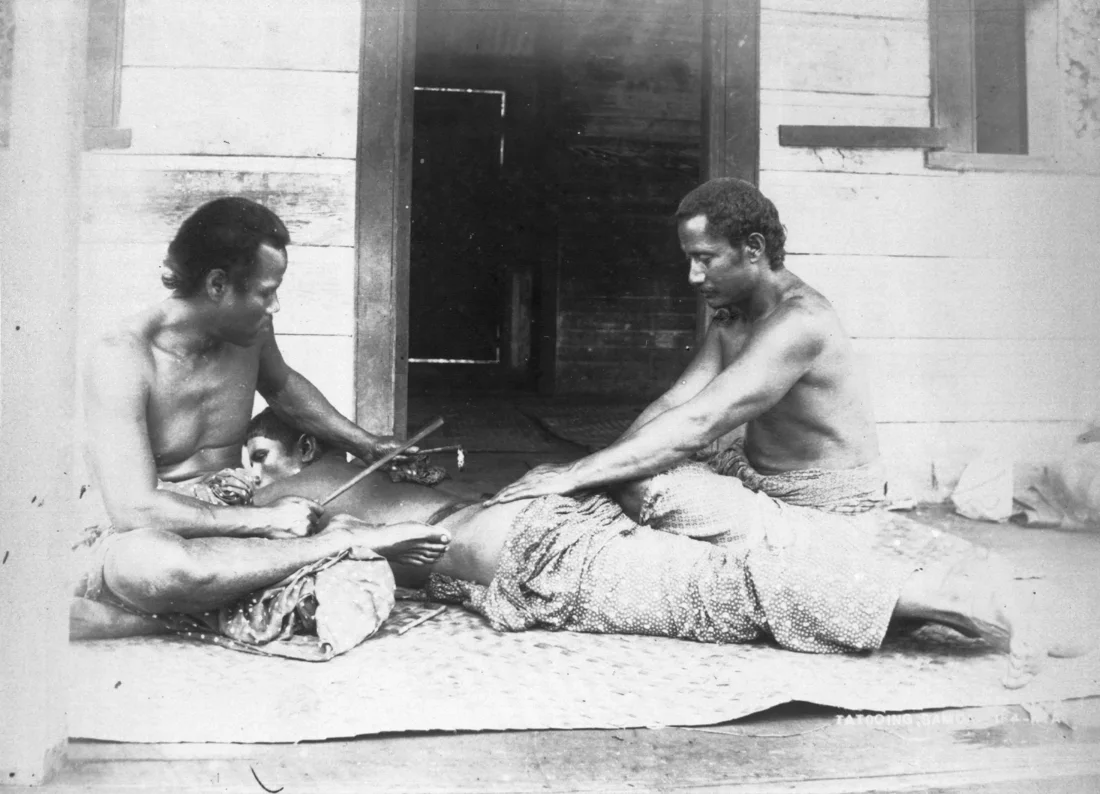

A tool helps explain how the marks are made. It cannot explain who the work is for.
Te Papa documents the Sāmoan tattooing implement called the ‘au and presents the voice of a tufuga tatatau, a master tattooist. The hand-tapped method involves a tattooing implement and a separate striking tool. That distinction matters, but it is only one part of tatau.
Start with a practitioner’s voice
Te Papa’s digital exhibition includes a 1999 interview excerpt with the late Su‘a Sulu‘ape Paulo II. Read or listen to a practitioner before turning the design into an illustration. The pe‘a and malu are named forms discussed in Sāmoan contexts, not generic labels for any Polynesian tattoo with repeating geometry.
Don't use resemblance to assign an identity. Two patterns can look similar on a screen while having different contexts, names, and responsibilities for the people who make and wear them.